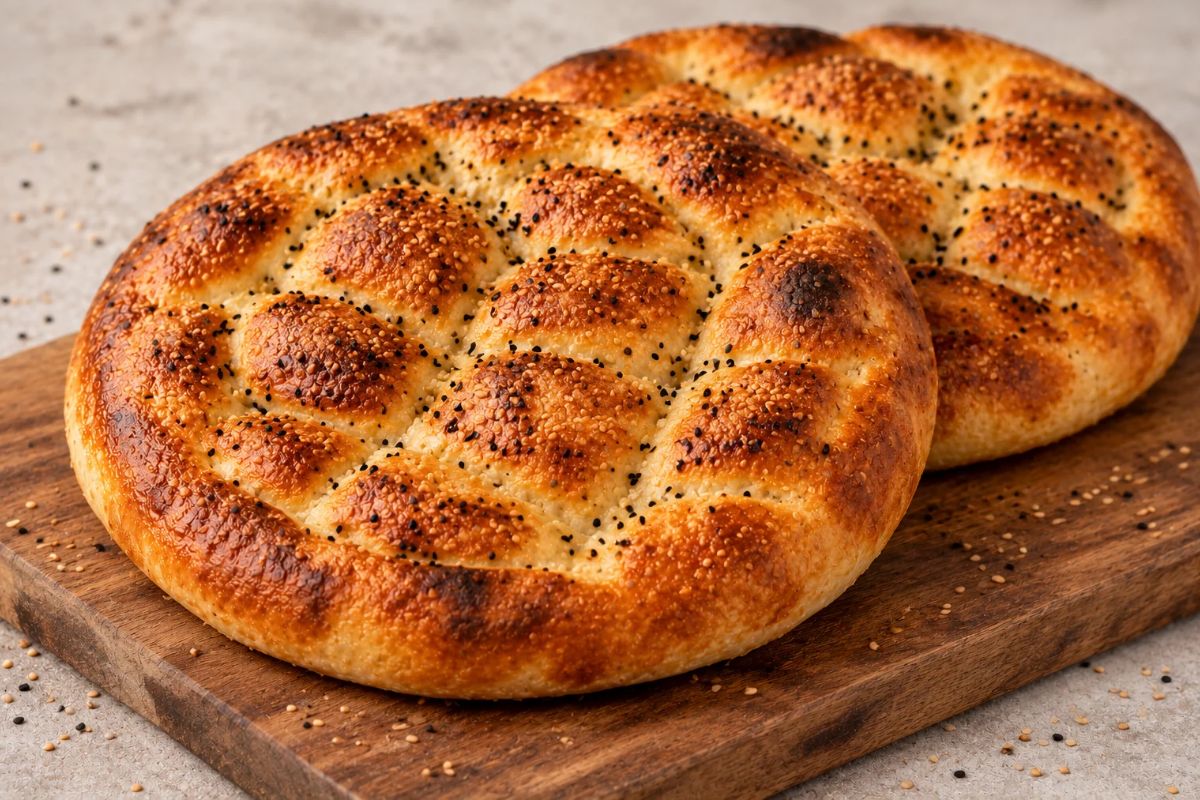
Pide bread, known in Turkey as Ramazan pidesi, is a soft, fluffy flatbread with a golden, sesame-topped crust and the classic fingertip pattern pressed across its surface. It is the bread that Turkish bakeries are known for around iftar time during Ramadan, and it is just as good the rest of the year.
Making it at home is easier than you might think. The dough is simple, with flour, milk, water, yeast, salt, a little sugar and oil, and it is softer than regular bread dough. A quick egg yolk and yogurt wash gives the pide its shine. Tear it by hand or cut it into quarters, and use it to scoop up dips, soak up soups and stews, or wrap around kebabs and köfte.
What Is Ramazan Pidesi?
Ramazan pidesi is a round or oval yeast flatbread traditionally baked and eaten during the month of Ramadan, especially around iftar and suhoor. Its dough is softer and wetter than everyday bread dough, which gives it a light, fluffy inside and a thin, lightly crisp crust. The top is brushed with an egg yolk and yogurt mixture, pressed with fingertips and sprinkled with sesame seeds and nigella seeds (çörek otu).
Pide Bread vs. Pita
Turkish pide bread is thicker, softer and fluffier than most pita. Pita is often baked so that it puffs into a pocket, while pide bread is an open, soft flatbread with a pressed pattern on top. It is also different from pide, the boat-shaped Turkish pizza with meat or cheese on top, which is a separate recipe on our site. If you enjoy homemade Turkish breads, try our Bazlama too.
How to Serve Pide Bread
Serve the pide bread fresh and warm, torn by hand or cut into four pieces. It is perfect with dips like hummus, haydari and ezme, with soups such as our Turkish Red Lentil Soup or Green Lentil Soup, and with kebabs and köfte. For a simple Turkish breakfast, serve it with cheese, olives, tomatoes and a glass of Turkish tea.
Tips for the Best Result
- Keep the dough soft and slightly sticky. A dough that is too firm makes a dry, hard pide.
- Make sure the oven is fully preheated before the pide goes in.
- Press the fingertip pattern deep. The dough rises in the oven and shallow marks fade away.
- Do not skip the short rest after shaping. It makes the pide light and fluffy.
- Place a small dish of hot water in the oven for steam. It keeps the crust from getting too thick and hard.
Variations
- Seeds: Use only sesame seeds, only nigella seeds, or skip the seeds for a plain golden pide.
- Without milk: Use 375 ml (1½ cups) warm water instead of the milk and water mix. The pide will be a little less rich.
- Bakery style: Some Turkish bakers brush the dough with şifa, a cooked flour and water paste, instead of an egg wash.
Here is the recipe for this Turkish pide bread.

Pide Bread (Ramazan Pidesi)
Soft, fluffy Turkish pide bread with a golden egg yolk and yogurt glaze, a pressed fingertip pattern and a sprinkle of sesame and nigella seeds. Makes 2 pide breads.
Ingredients
Dough
- 500 g all-purpose flour 4 cups
- 250 ml warm milk 1 cup
- 125 ml warm water ½ cup
- 7 g instant or active dry yeast 2¼ tsp
- 2 tsp sugar
- 2 tsp salt
- 3 Tbsp neutral oil such as sunflower
Topping
- 1 egg yolk
- 1 Tbsp plain yogurt
- 1 Tbsp water
- 2 Tbsp sesame seeds
- 1 tsp nigella seeds (çörek otu) optional
Instructions
-
Activate the yeast.
Stir the sugar and yeast into the warm milk and water and let it sit for 5 to 10 minutes, until foamy.
-
Make the dough.
Mix the flour and salt in a large bowl. Add the yeast mixture and oil. Knead for 8 to 10 minutes, until the dough is soft and slightly sticky. Wet your hands instead of adding extra flour.
-
Let it rise.
Cover the bowl and rest in a warm place for 45 to 60 minutes, until the dough has doubled in size.
-
Shape the pide.
Divide the dough into two equal pieces and shape each into a smooth ball. Place them on a baking sheet lined with parchment paper. With wet fingertips, gently press each ball into a round or oval, without pressing out all the air.
-
Rest the shaped dough.
Cover and let the pide rest for 15 to 20 minutes. Meanwhile, preheat the oven to 220°C (425°F) and place a small ovenproof dish of hot water on the bottom rack.
-
Brush and press.
Whisk the egg yolk, yogurt and water, and brush it over the dough. Dip your fingertips into the mixture and press deep dimples across the surface in a grid or diamond pattern. Sprinkle with sesame and nigella seeds.
-
Bake.
Bake for 18 to 22 minutes, until golden brown on top and bottom.
-
Cool and serve.
Move the pide to a wire rack. Serve warm, torn by hand or cut into four pieces.
Recipe Notes
- Keep the dough soft and slightly sticky. A dough that is too firm makes a dry, hard pide.
- Make sure the oven is fully preheated before the pide goes in.
- Press the fingertip pattern deep. The dough rises in the oven and shallow marks fade away.
- Do not skip the short rest after shaping. It makes the pide light and fluffy.
- Place a small dish of hot water in the oven for steam. It keeps the crust from getting too thick and hard.